Requirements you meet
Match details list the requirements from the posting in order and mark each one as met, partly met, or missing, based on your profile and resume.
Job match score
Openskill gives every job an AI-powered match score based on your profile and resume, so you can find the best jobs among millions of openings. Each score comes with the details behind it: the requirements you meet, the gaps worth preparing, and how the role fits your level and location.
Openskill reads the requirements in a job posting and compares each one with your profile and resume. It gives the job a match score with a Strong match or Good match label, and shows which requirements you meet, partly meet, or miss.
The short answer
A job match score is an estimate of how well your experience fits a specific job. On Openskill, the score comes from the requirements in the posting and the background in your profile and resume, and it is shown with a plain label and a requirement-by-requirement breakdown so you can see why a job scored the way it did.
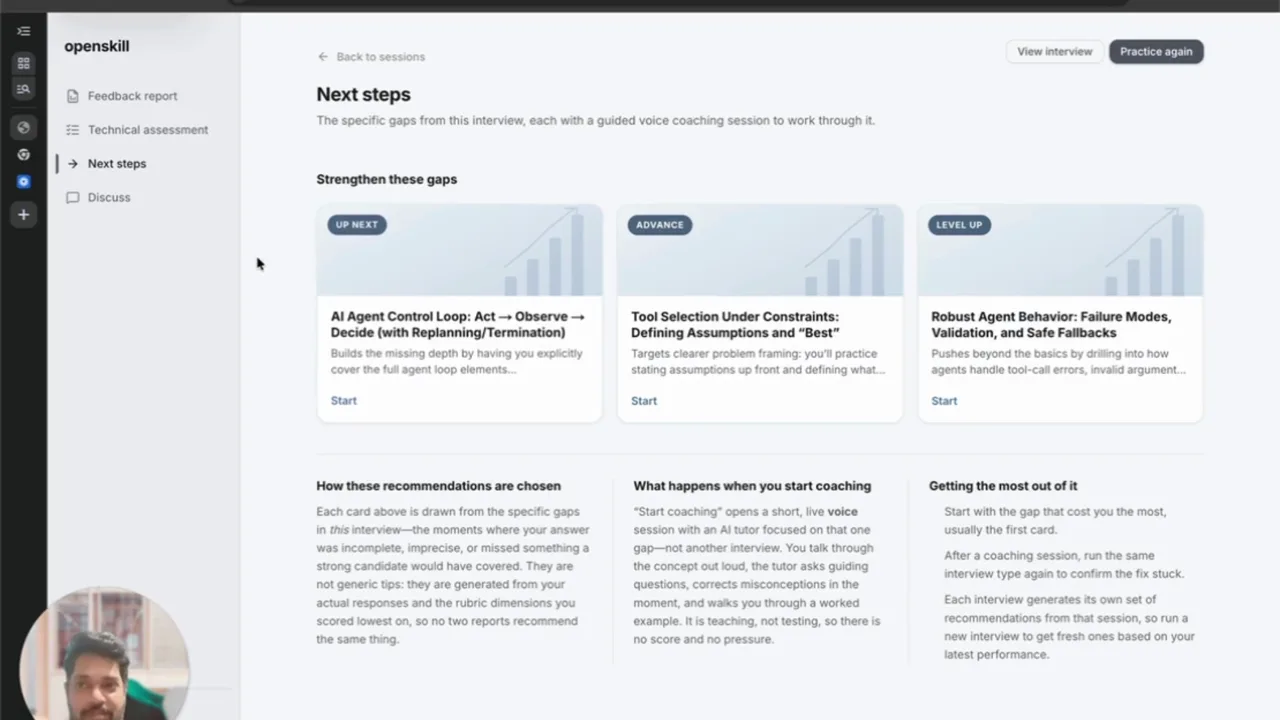
Practice with context
Use the score to decide where to spend your time. Sort jobs by best match, open the strongest ones first, and prepare for the gaps before you apply.
Match details list the requirements from the posting in order and mark each one as met, partly met, or missing, based on your profile and resume.
The requirements you only partly meet become a short list of gaps, so you know what to strengthen in your resume and what to prepare an answer for.
See whether the level and years of experience fit you, whether the role is remote, hybrid, or on-site, and whether visa sponsorship looks likely.
An example insight
This is how a single requirement from a posting appears in your match details.
Your resume mentions one launch test but no ongoing experiment program. Prepare an example that shows how you designed a test, chose the metric, and acted on the result.
Choose your target roles and job preferences, and add your resume to your profile.
Search millions of jobs and sort by best match, or start from Jobs for you.
Open a job, review the match details, and practice the likely interview with one click.
Inside the match details
Use it deliberately
Questions
The score uses the requirements in the job posting and the information in your Openskill profile and resume, such as your target roles, experience, and skills.
No. The score shows how well your background fits the written requirements. Employers decide who to interview, so use the score to prioritise and prepare.
Update your profile and resume with experience that the posting asks for, and use the gaps in your match details to decide what to prepare before you apply.
Yes. When your profile has target roles, you can sort search results by Best match or Most recent.
Sessions longer than three minutes receive a scored feedback report. It includes strengths, areas to improve, communication signals, a recording with chapter markers, and question-by-question feedback when the format uses questions and answers.
Yes. Paste a job description, a job posting URL, or a plain-language description into Openskill. You can review the generated interview before you begin, and custom interviews stay in your library for another attempt.
Independent guidance
Use these external guides alongside voice practice when you want another perspective on interview preparation.