Choose evidence, not adjectives
Instead of calling yourself collaborative or resilient, describe the moment that demonstrates it. Specific decisions, actions, and consequences make a story easier to assess and remember.
Behavioral interview practice
Behavioral interview practice is most useful when someone challenges the convenient parts of your story. Openskill listens to your spoken answer and can ask for the decision, conflict, individual contribution, or measurable result you skipped.
Preparing for a behavioral interview means building a small set of real stories, each with a clear situation, the action you personally took, and a measurable result, then checking them against the competencies in the job description. The stronger preparation comes from practicing how you tell those stories under a real follow-up question, not from memorizing a script.
The short answer
Choose six to eight real experiences that cover collaboration, conflict, failure, ambiguity, leadership, and impact. Practise each one aloud with a clear situation, your task, the actions you personally took, and the result. Then answer follow-ups without forcing every detail into a memorised script.
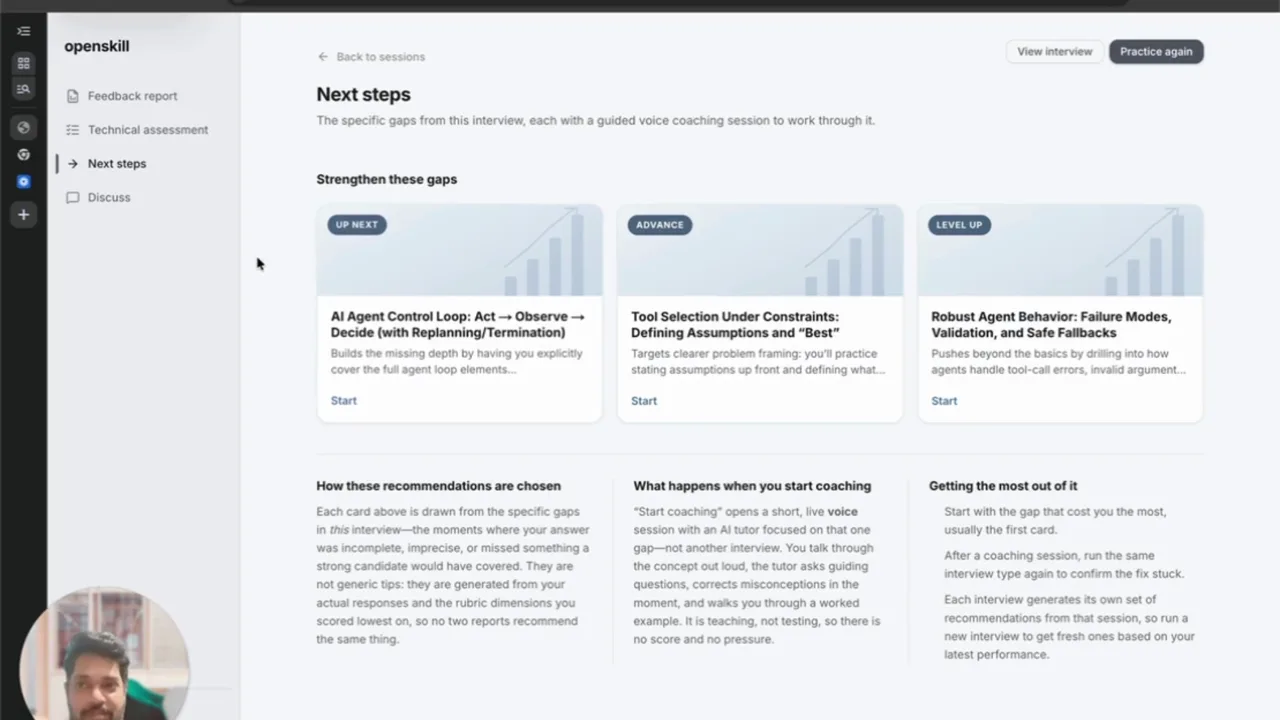
Practice with context
Start from a behavioral interview in the library or build one around the competencies and responsibilities in your target job description.
Instead of calling yourself collaborative or resilient, describe the moment that demonstrates it. Specific decisions, actions, and consequences make a story easier to assess and remember.
Team context matters, but interviewers still need to know what you owned. Practise moving clearly between what the group did and the action you personally took.
A follow-up may ask what you would change, who disagreed, or how the result was measured. Rehearsing those details helps the answer stay coherent when the conversation moves off script.
A sample question
This is the kind of opening prompt you can practice in a live session.
Explain the goal, your responsibility, the early warning you noticed or missed, the action you took, the result, and what changed in your later work.
Use the job description to choose the behaviors most likely to matter.
Speak through a real example and let the interviewer probe the missing detail.
Replay the recording, tighten the structure, and answer again naturally.
Good prompts to practise
Use it deliberately
Questions
STAR is a useful check for situation, task, action, and result, but the answer should still sound like a conversation. Keep context short, make your action specific, and leave room for follow-up questions.
Sessions longer than three minutes receive a scored feedback report. It includes strengths, areas to improve, communication signals, a recording with chapter markers, and question-by-question feedback when the format uses questions and answers.
Yes. Paste a job description, a job posting URL, or a plain-language description into Openskill. You can review the generated interview before you begin, and custom interviews stay in your library for another attempt.
Independent guidance
Use these external guides alongside voice practice when you want another perspective on interview preparation.